


You Don't Need a Turning Point to Start
A man at a live session in Athens asked me about my turning point: the single moment when everything I had learned finally came together. I could not give him one. People often imagine that change requires a dramatic event, but I do not think you have to wait for one. If you know there is work to do, you can begin today and repeat it tomorrow.
“Just go do it every day.”
That answer sounds simple because it is. It is also harder to practice than to say. A new plan gives you energy for a few days; a habit asks you to keep going after that first feeling wears off.
Keep doing what works
The man who asked the question had recently changed his diet. He told the room he now had more energy and was following through on things he had known he should do for a long time. He had a background in gymnastics and still trained regularly. His question was what to do when he felt he was finally on top of things.
My answer was to keep going. You do not need to replace a useful habit with a more complicated system simply because it has begun to work. Give the change enough time to become part of ordinary life, then notice where the next obstacle is.
For me, lifting weights four days a week had become a commitment I could keep while traveling. Diet was harder. I talked about a long-standing habit of eating when I was stressed or could not sleep. I could trace where it came from, but as an adult I still had to take responsibility for what I did next. The lesson was not that everyone should follow my training schedule. It was that I could apply the consistency I already had in one area to another area I had avoided.
When the mood changes, the commitment can still hold. I develop that idea in my article on doing the work whatever your mood.
Use your ordinary hours deliberately
Habits affect each other. I spent years in college and kept learning outside a classroom. Much of that learning came from books and audiobooks, including time spent in a car on the way to an airport. If I wanted to listen closely, I asked the driver to turn off the music. That was a small choice about how I used a predictable stretch of time.
I was blunt in Athens about entertainment and competition. My view was that if I spend every available hour on leisure, I should not be surprised when someone who keeps learning gets further in a field we both care about. Leisure has a place, and the balance will differ by person. The useful question is whether the way you spend the hours between obligations matches the outcome you say you want.
Even reading needs judgment. The wrong book can reinforce a bad idea. I want to choose good sources, test what I learn, and do something with it rather than collect advice without changing my behavior.
Choose an adventure you can act on
Being in Athens made me think about philosophy and the people who pursued ambitious work before us. I used an ancient-history story in the session as a metaphor, not as a carefully sourced historical account. The question I wanted the audience to ask was personal: what are you going to do with the time and opportunities you have?
I am not working toward a monument. I do care whether my work helps someone make a useful change. If a person lives somewhere with a difficult economy, that difficulty is real. It can still be worth asking what work or learning the internet makes possible from where they are. The starting point is the situation in front of you, not an imagined perfect setting.
Find people who will keep going too
Near the end, I asked people in the room to meet one another. A serious friend or collaborator can make it easier to keep a commitment, exchange useful ideas, and see an opportunity you would miss alone. This is one reason I say business is a team sport.
There is no single catalyst you must wait for. Keep a useful habit, fix the area you have been avoiding, use your ordinary hours well, and find people whose word means something. The turning point may be the repeated work itself.
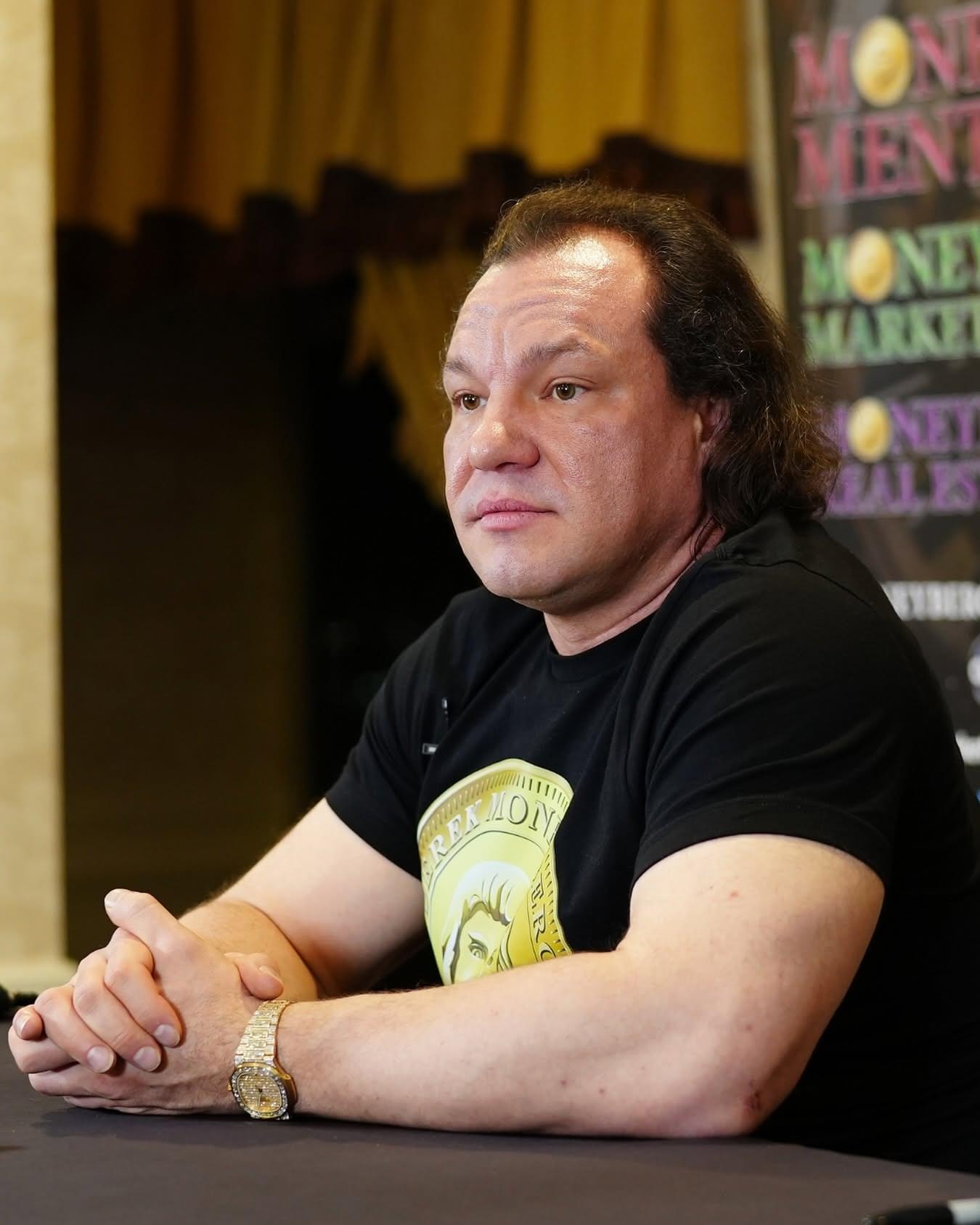
I’m an investor, entrepreneur, wealth coach, and host of The Derek Moneyberg Podcast.
Other posts by Derek