


Learn From a Mentor’s Experience: Ask Better Questions
When a coach tells me I'm doing well, I appreciate it. Then I want to understand what I'm missing and how I could perform the movement better. Encouragement gives me a reason to keep working; specific corrections give me something to work on.
I talk about that approach in this conversation with Chael Sonnen. I take the opportunity to learn seriously. A person who has spent years developing a skill can see details I haven't learned to recognize yet. If I have access to that person, I want to use the time to understand those details.
Chael approaches the same subject through stories about his own coaches. He talks about the experience behind a lesson: the training, the competition, the mistakes, and the physical cost of finding out what works. The student gets the explanation without having to repeat every experience that produced it.
Ask about the experience behind the lesson
Early in our conversation, Chael describes a longtime boxing coach. He remembers a man whose energy made him feel good about training and want to come back the next day. That encouragement was a large part of what the coach gave him.
Chael also wanted to hear more about the coach's experience in the ring and in training camps. Some experiences that fascinated the student weren't the stories the coach routinely told. A coach can have a history worth asking about without making that history the center of every lesson.
That's a useful distinction for anyone who has access to an experienced person. Hearing the instruction is one opportunity. Asking what the instructor learned while developing it is another. The answer can give the lesson a context that a quick demonstration doesn't provide.
Chael describes wanting to understand what his coach had gone through and what that experience could teach him. He's talking about curiosity toward someone he already knew well. Knowing a person for years doesn't mean you've asked all the useful questions.
Understand what someone has already paid to learn
Chael tells another story about a fighter explaining the price of a private lesson. The explanation involved the preparation required to test a technique: travel, a training camp, making weight, and facing an opponent. The hour with the student came after all of that work.
The point of his story is the experience behind the instruction. A technique may take only a short time to explain once someone understands it. That doesn't tell you how long it took him to develop that understanding, or what it cost to discover where the technique fails.
I recognize that value in the coaching I've sought. In our conversation, I talk about how seriously I've taken the chance to work with my coaches. I want to get beyond being impressed by someone's experience and actually learn something from it.
The student still has work to do. My discussion of the practice I can't delegate explains that responsibility through wrestling and weightlifting. Another person's experience can inform my practice. I still have to participate in developing the skill.
Use access before you act on something unfamiliar
Chael gives a financial example from his own experience. He says he contacted me when he was trying to understand options. I sent him a class and told him to ask questions before proceeding because the subject could be tricky.
He explains why asking mattered to him. He had access to someone he could consult and felt it would have been a mistake to leave that access unused. The educational exchange began with a specific question about something he didn't understand.
Keep asking after someone says you're doing well
Later, I describe the questions I bring to my coaches. Praise doesn't finish the conversation for me. I want to know what remains to improve.
“What would perfect look like?”
That's the question I use after thanking someone for telling me I'm doing well. It gives us something more specific to discuss. If the coach can describe a better version of the movement, I can start to understand the difference between what I'm doing and what I'm trying to do.
I ask what else I could do and what I'm missing. The willingness to ask is part of how I approach the work. I don't expect a coach's first encouraging response to contain every correction he could offer.
I also say that I like that level of detail. Improvement interests me enough to keep the conversation going. I'm willing to hear that there is more work available even when the current attempt is good.
Be willing to compare what you know with someone else's approach
Chael recalls an early visit when we moved a coffee table and worked on a head-and-arm choke on the carpet. He had an opinion about the technique, and I had a somewhat different opinion. We got on the ground to examine it.
He remembers being uncertain about how intensely we were going to practice. We each had an approach to the move, and getting on the ground gave us a way to examine those differences. We were willing to spend time working through a technique instead of leaving the conversation at our initial opinions.
He connects that memory to my willingness to approach people and ask questions. In his description, recognizing that someone knows more is an opportunity. Feeling intimidated by that knowledge can prevent a conversation that would be useful.
The same openness matters in choosing the people I learn and work alongside. I want people whose experience can help me develop, and I have to bring enough humility to listen to them.
Give learning time to turn into progress
Near the end, Chael compares the time involved in financial progress with the time involved in a diet. He describes people wanting a result immediately and resisting the fact that it takes time.
A mentor can explain something that took years to learn. That doesn't make every result immediate. The explanation gives me something to study, question, and practice.
At the next practice, I want to get beyond hearing that I'm doing well. I want the coach to show me the detail that needs work so I can make another attempt with a clearer understanding. That's how I want to use the opportunity to learn from him.
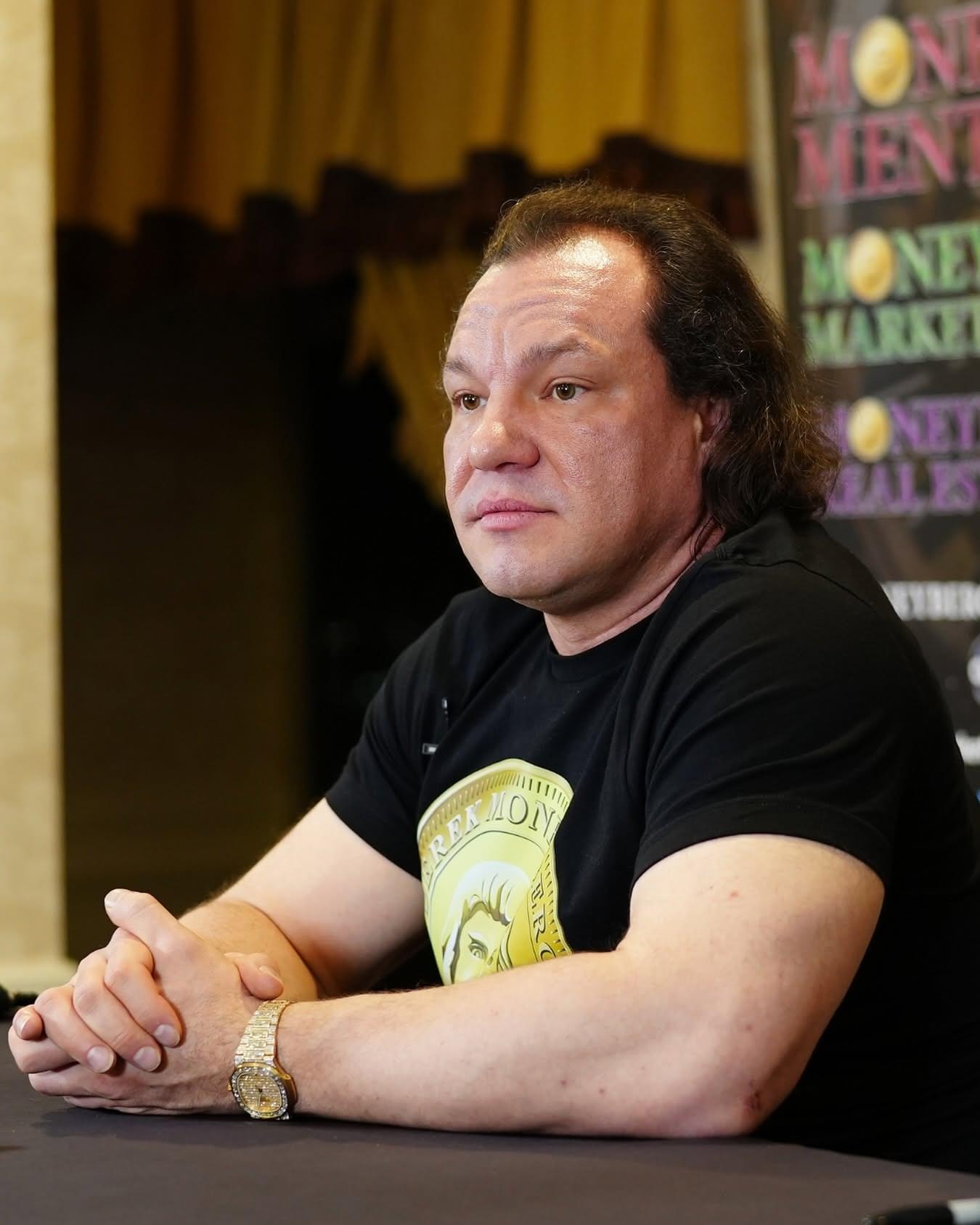
I’m an investor, entrepreneur, wealth coach, and host of The Derek Moneyberg Podcast.
Other posts by Derek